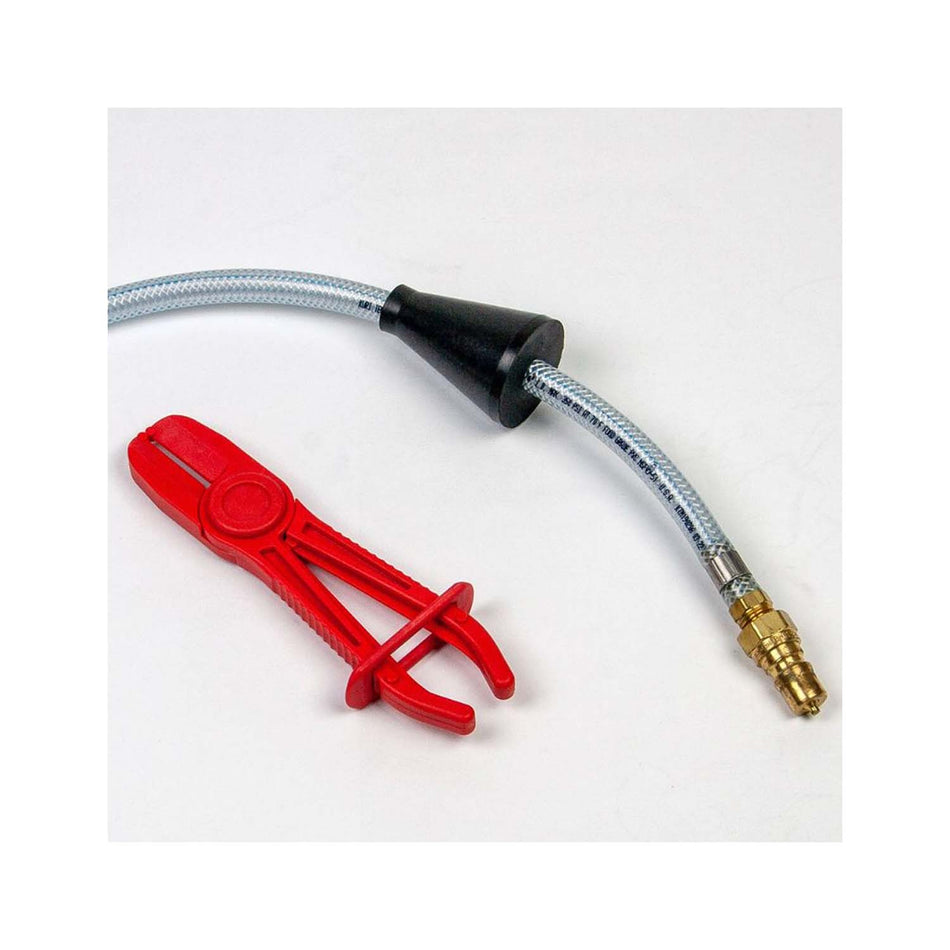
Fluid Exchange Evacuation
Fluid evacuation and recovery equipment for shop fluid service work — vacuum-based oil extractors, ATF evacuation tools, coolant recovery units, and fluid extraction equipment that complements full fluid exchange machines. Evacuation equipment handles fluid removal in service procedures where a full exchange machine is not used. This collection covers Mahle and Flo-Dynamics evacuation tools and shop-grade extractors. Alamo Equipment is an authorized dealer with parts and service support nationwide.
Fluid Exchange Evacuation FAQs
Fluid evacuation tools handle the extraction side of fluid service when a full exchange machine is not used — efficient and clean removal.
Fluid exchange machines simultaneously remove old fluid and refill with fresh fluid, achieving 95+ percent replacement. Evacuation equipment only removes fluid — refill is done separately, typically with a top-up or manual fill. Evacuation suits oil changes, partial fluid services, and pre-service preparation; exchange suits scheduled full-system fluid replacement.
Vacuum extraction through the dipstick tube is typically faster than draining for engine oil changes — no need to raise the vehicle, position drain pans, and reinstall drain plugs. Many quick-lube and dealership lube bays use vacuum extraction as the standard oil change method, completing the service in under 10 minutes per vehicle.
Modern vacuum oil extractors achieve 90 to 98 percent removal on most engines with the correct dipstick tube probe. The small remaining residual is comparable to what is left after a standard drain — drain plugs do not remove every drop either. Extraction completeness depends mostly on probe positioning and engine design.
Most modern passenger cars and light trucks with accessible dipstick tubes accept vacuum extraction safely. Some platforms with no dipstick or with restrictive tube geometry require standard drain procedures. Check the vehicle service information before assuming extractor compatibility.
ATF evacuation tools remove transmission fluid through the fill or dipstick tube using vacuum, similar to engine oil extraction. They are used when a full ATF exchange is not appropriate or available. Less complete than a full exchange but useful for partial fluid replacement on light service intervals.
Most vacuum extractors are pneumatic (run off shop compressed air via a venturi) or 12V DC battery-powered for mobile use. Electric AC-powered models are available for stationary shop use. Match power source to your bay layout and intended portability.
Used oil, ATF, and coolant must be disposed of through licensed recyclers per EPA and state requirements. Most shops contract with a fluid recycling service for periodic pickup. Never mix incompatible fluids in storage — keep oil, ATF, coolant, and brake fluid in separate labeled containers.
For partial service work, yes. For complete scheduled fluid service, no. Customers paying for a complete coolant or ATF service expect 95+ percent fluid replacement — evacuation alone delivers far less. Use evacuation as a supporting tool, not a substitute for full exchange equipment.